01
Eighty rebuilt houses
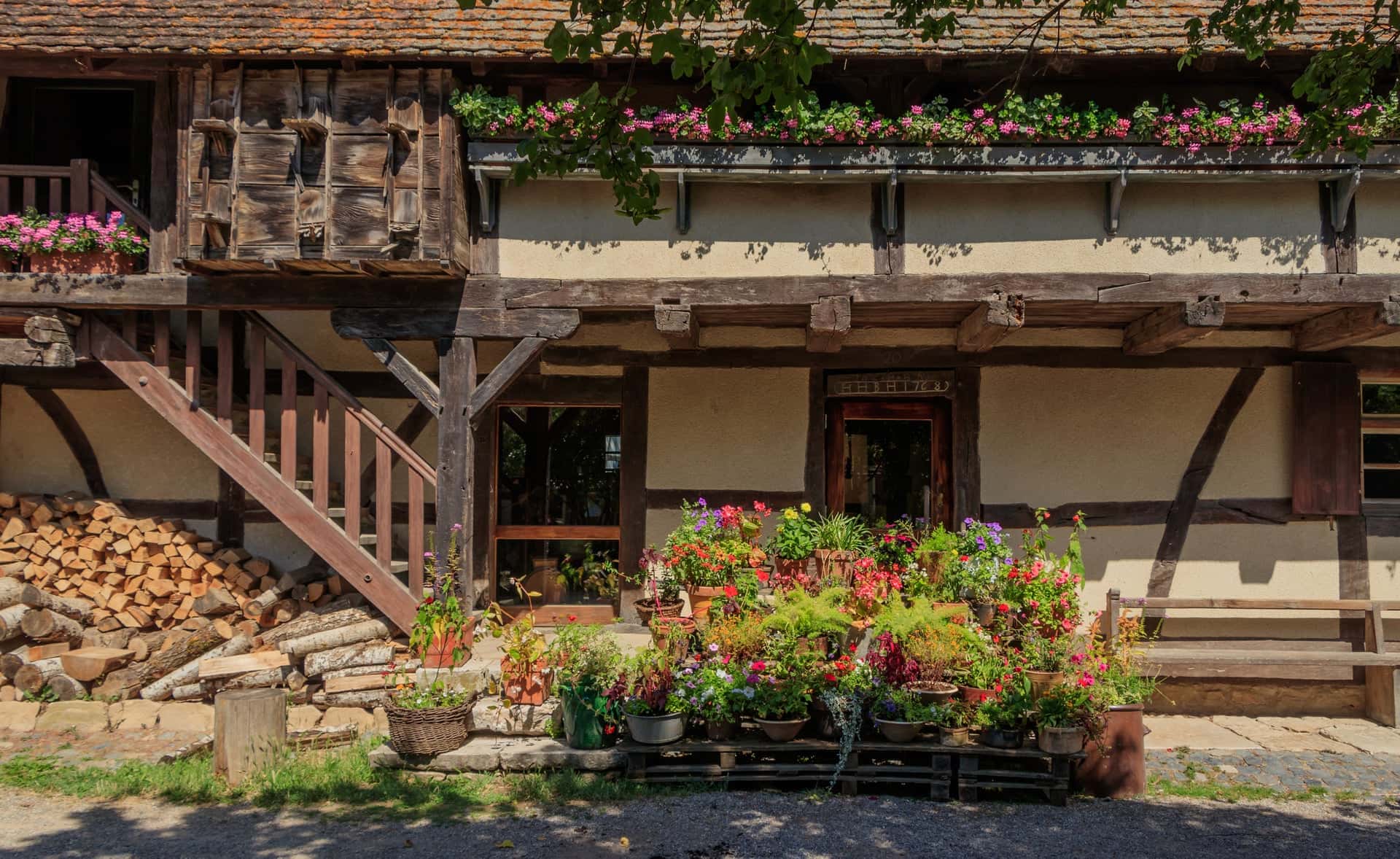
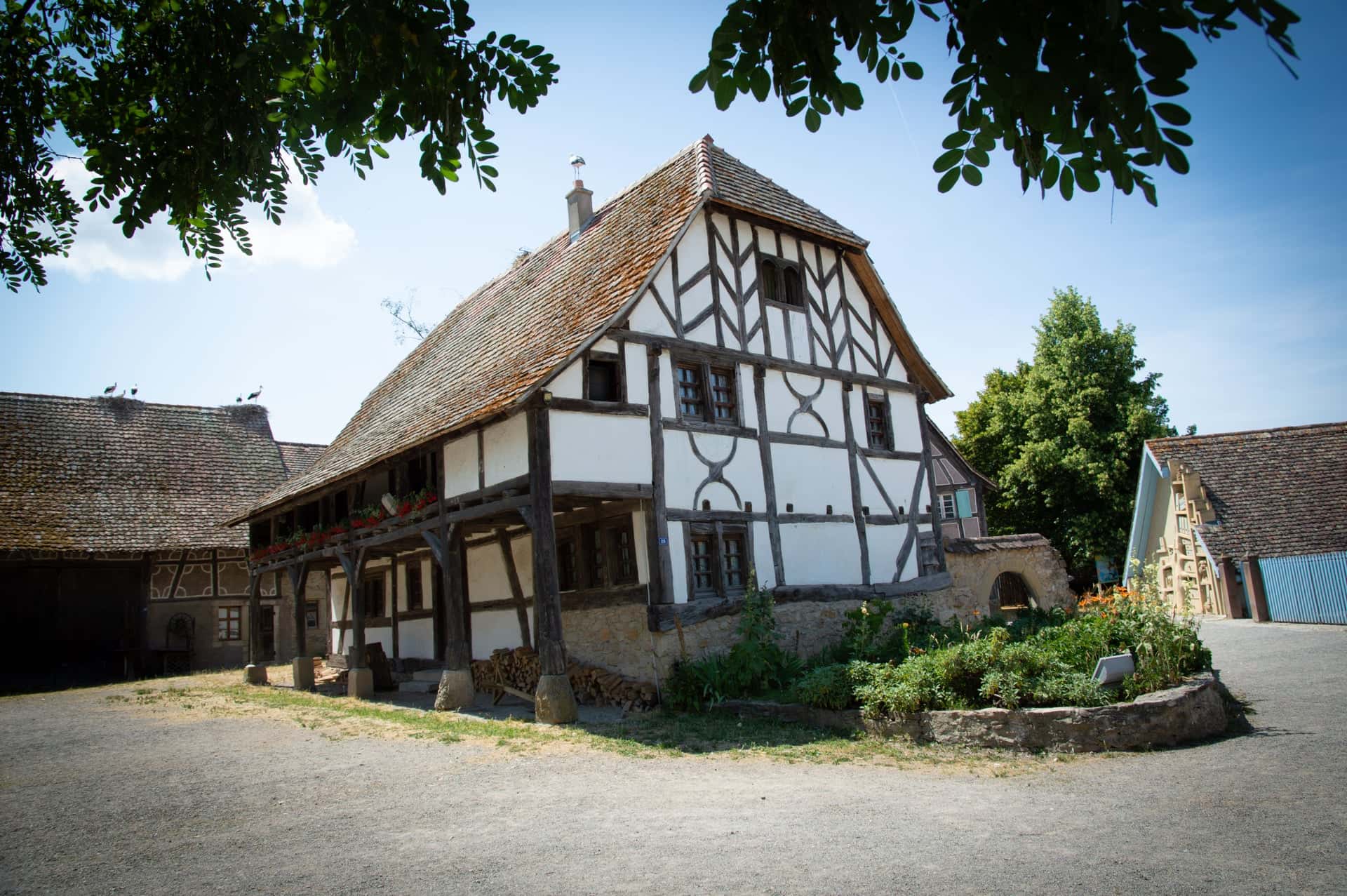
Every building was taken apart in its home village, carted here and reconstructed exactly as it was. The doors open: inside is a staged interior, a cowshed or a workshop.
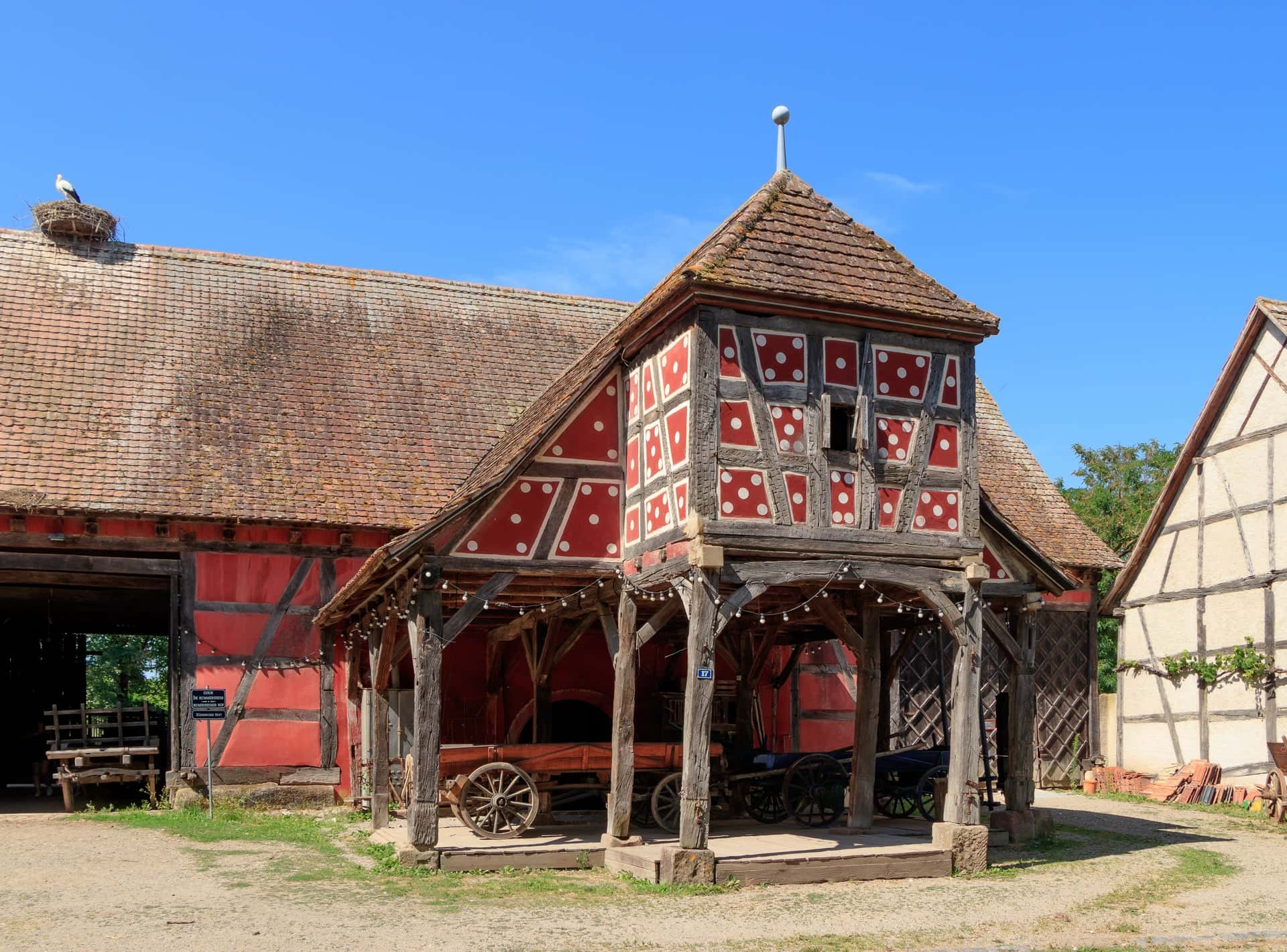
A whole Alsatian village, taken apart house by house elsewhere in the region and rebuilt at Ungersheim. Eighty buildings, craftspeople at work, farm animals.
The Écomusée d'Alsace is a complete, inhabited village rather than a collection behind glass. Eighty buildings representative of rural Alsace have been rebuilt here after being dismantled beam by beam in their home villages, where they were due for demolition. You push open every door: behind it is a furnished interior, a cowshed, a potter's or a wheelwright's workshop. Craftspeople work in front of visitors, old breeds of livestock fill the farms, and more than a dozen activities run through the day, from 10:30am to 5:45pm. It is the outing that works whatever the weather, and it really does take a day: the museum gives one entry free for one bought in the last two hours, which tells you plainly what a short visit leaves out.
It began in 1971, when a group of history and archaeology students led by Marc Grodwohl grew alarmed at the disappearance of Alsatian farmhouses. At Gommersdorf, in the Sundgau, they restored a few and dismantled others that were headed for destruction. The association Maisons paysannes d'Alsace was founded in 1973. Unable to keep the buildings where they stood, it decided to rebuild them identically elsewhere: the village of Ungersheim offered a patch of waste ground between Mulhouse and Colmar, and the house from Kœtzingue was re-erected there in September 1980. Nineteen more followed. The museum opened to the public on 1 June 1984 and drew 75,000 visitors in its first year; Jack Lang inaugurated it. The Tour Forte, rebuilt between 1985 and 1987 from late-15th-century fragments of Mulhouse's medieval ramparts, marked a shift in scale. Close to 300 volunteers still keep the association going today.
What you really shouldn't miss during your visit.
Every building was taken apart in its home village, carted here and reconstructed exactly as it was. The doors open: inside is a staged interior, a cowshed or a workshop.
Forge, pottery, wheelwright, saddlery, stained-glass workshop. Demonstrations run all day: the blacksmith works from 2pm to 3:30pm and again from 4:30pm to 5:45pm.
Old and local breeds, spread across the farms. The feeding round by cart leaves at 10:30am, the pigs eat at 1pm, and the animal parade comes through at 2pm.
Rebuilt between 1985 and 1987 with stone from Mulhouse's medieval ramparts, it stands between the Renaissance garden and the medieval garden. You can see it from far off.
Two ways of crossing the museum without walking, welcome once small legs give out. The tractor leaves from the Place des Charpentiers, €1 per person, times posted on site.
Primary certificate drill at 10:45am, old-fashioned games at 11:45am. Children sit down at the old desks and play along.
The place from several angles, to prepare your visit.
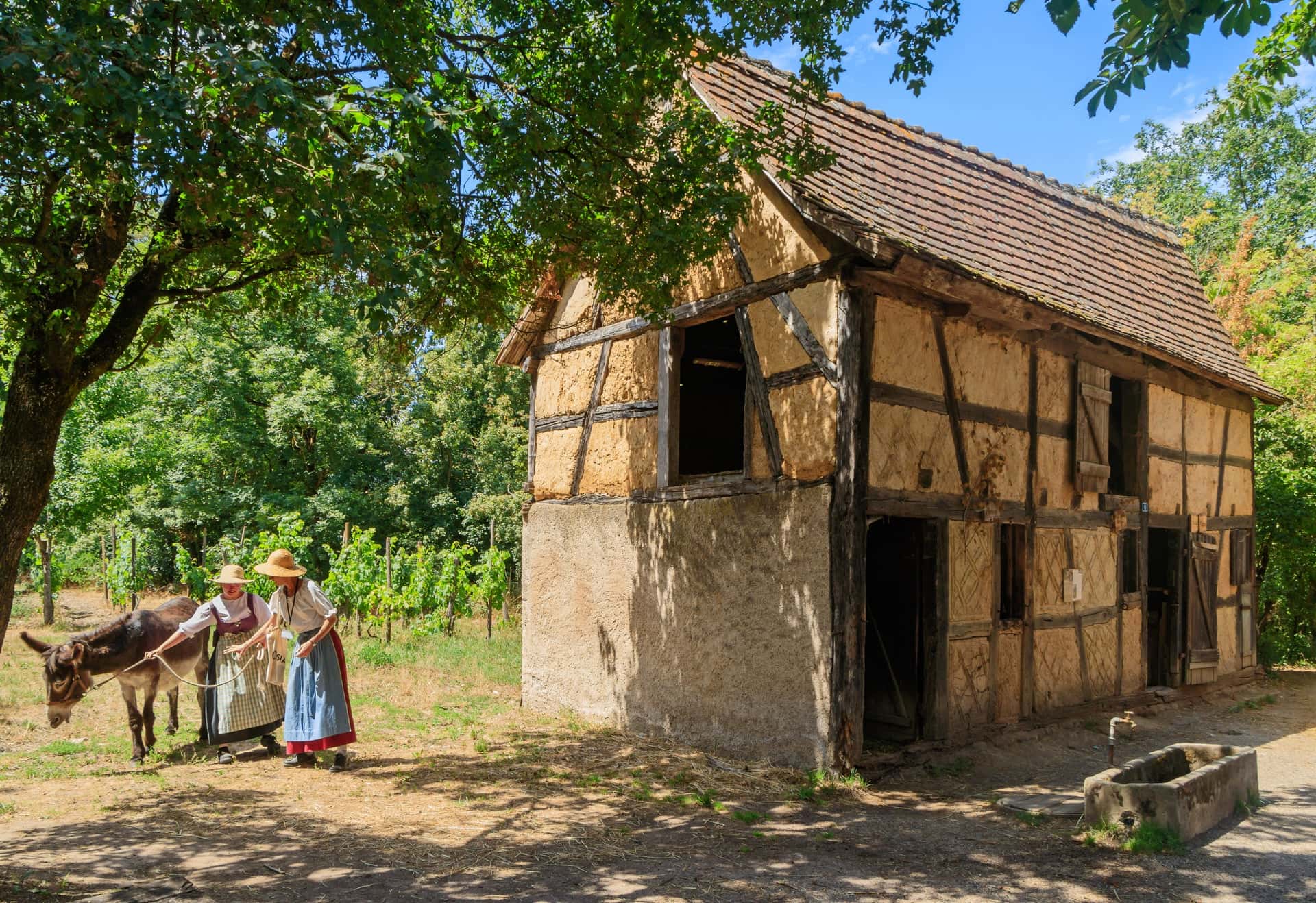
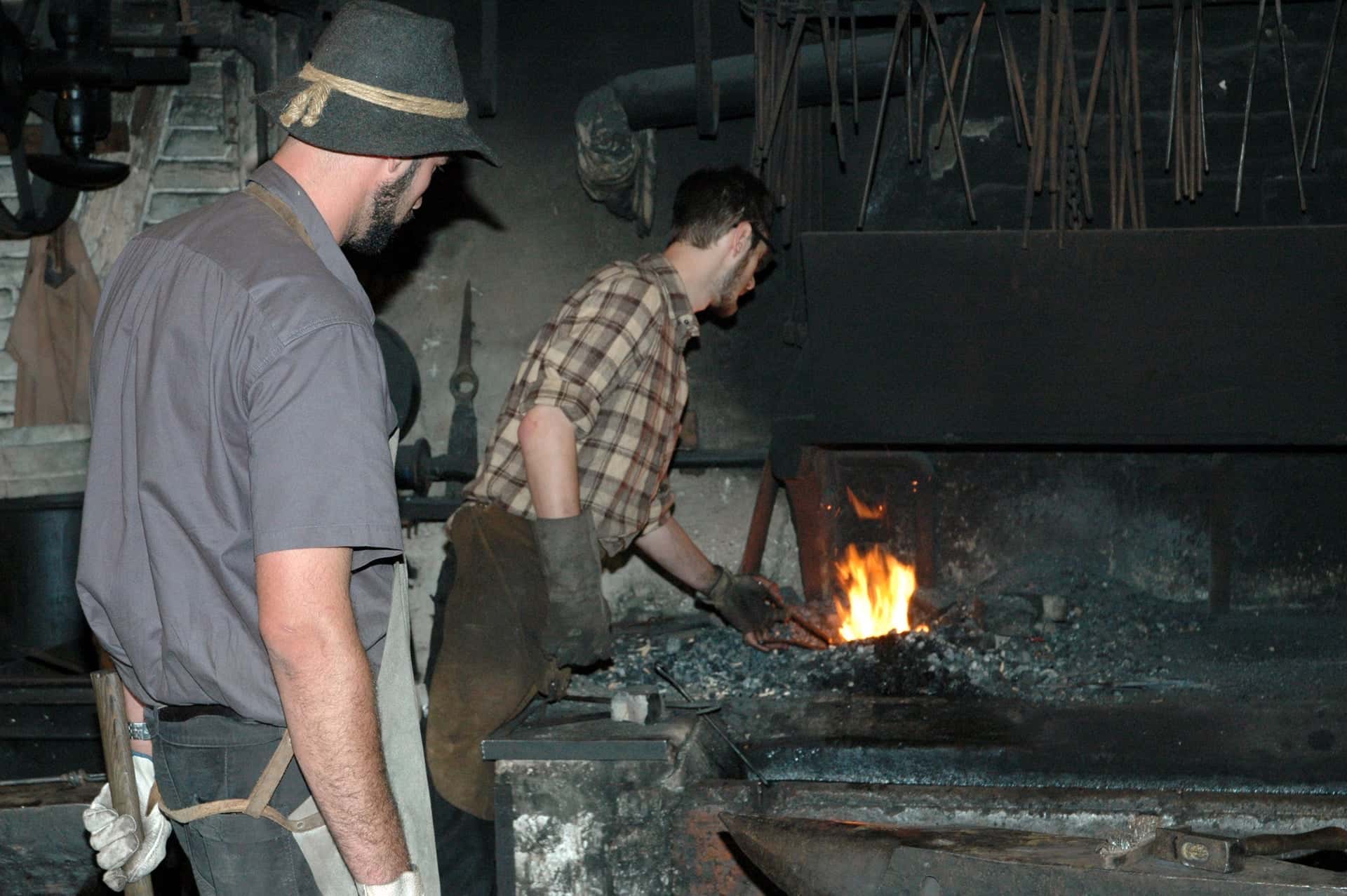
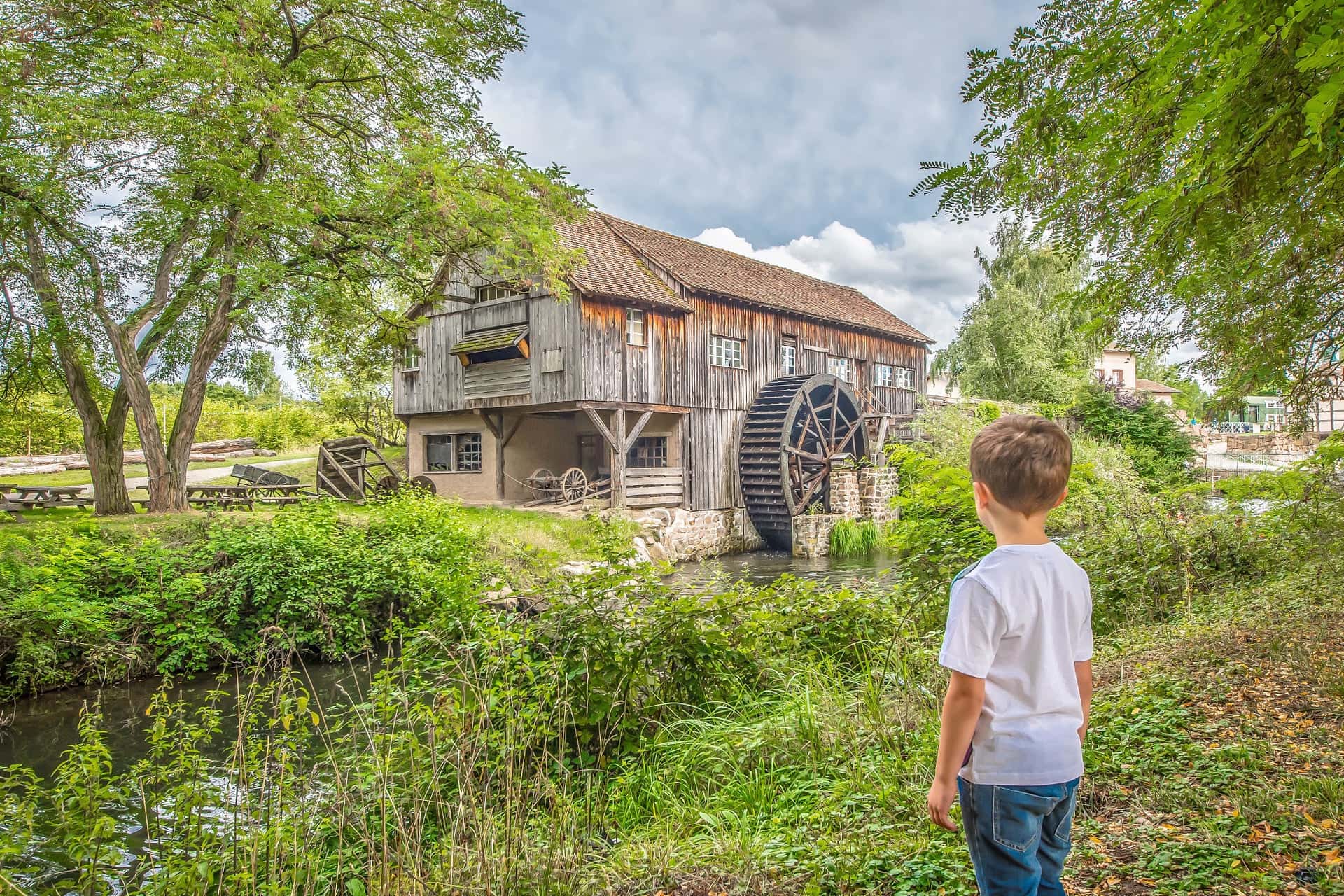
Our cottage for 9 and our caravan for two are just 5 minutes away, in pure nature.
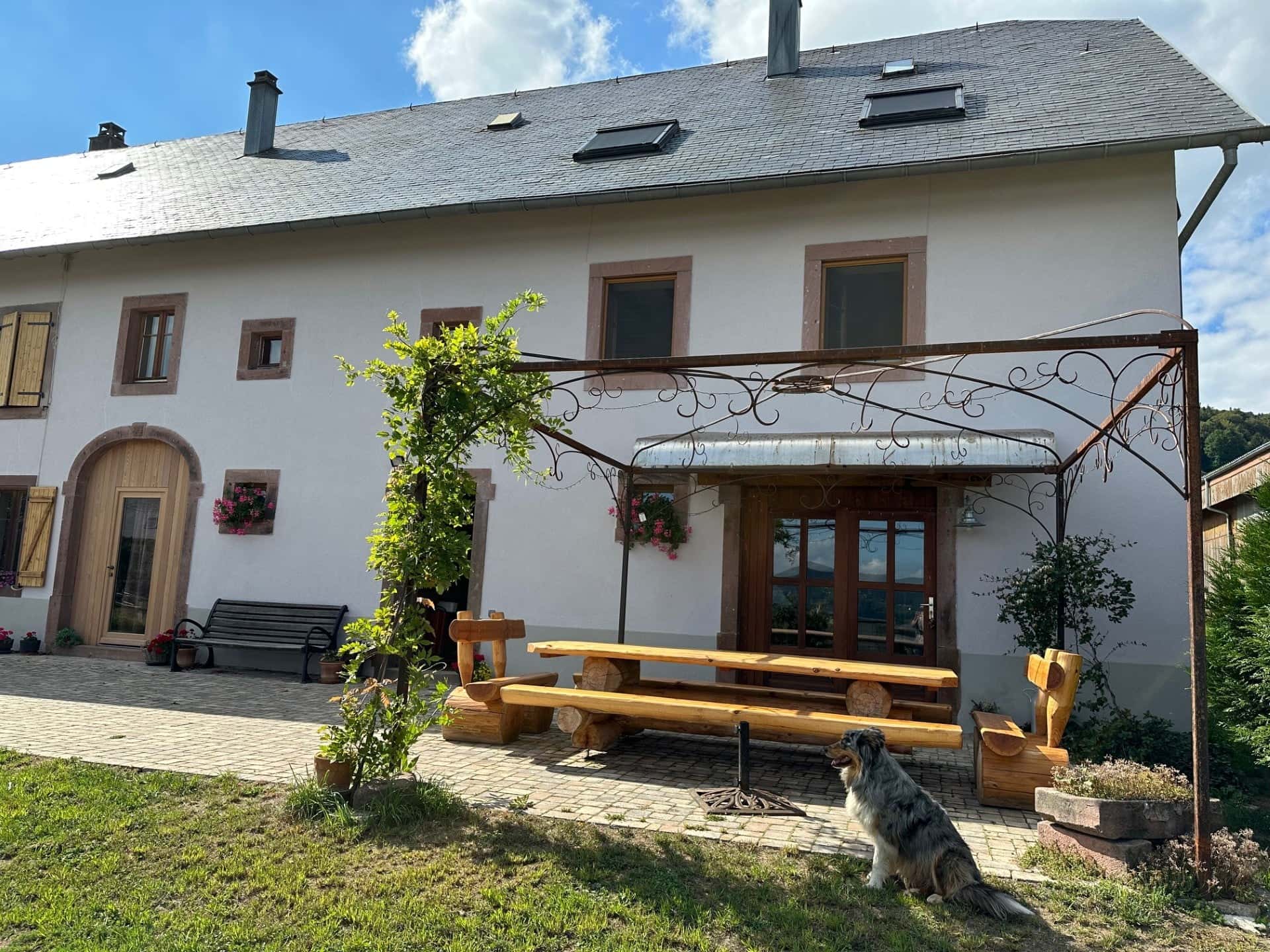
The Cottage
Large and warm, perfect for families and groups of friends who want a comfortable base to explore the region.
Up to 9 guests
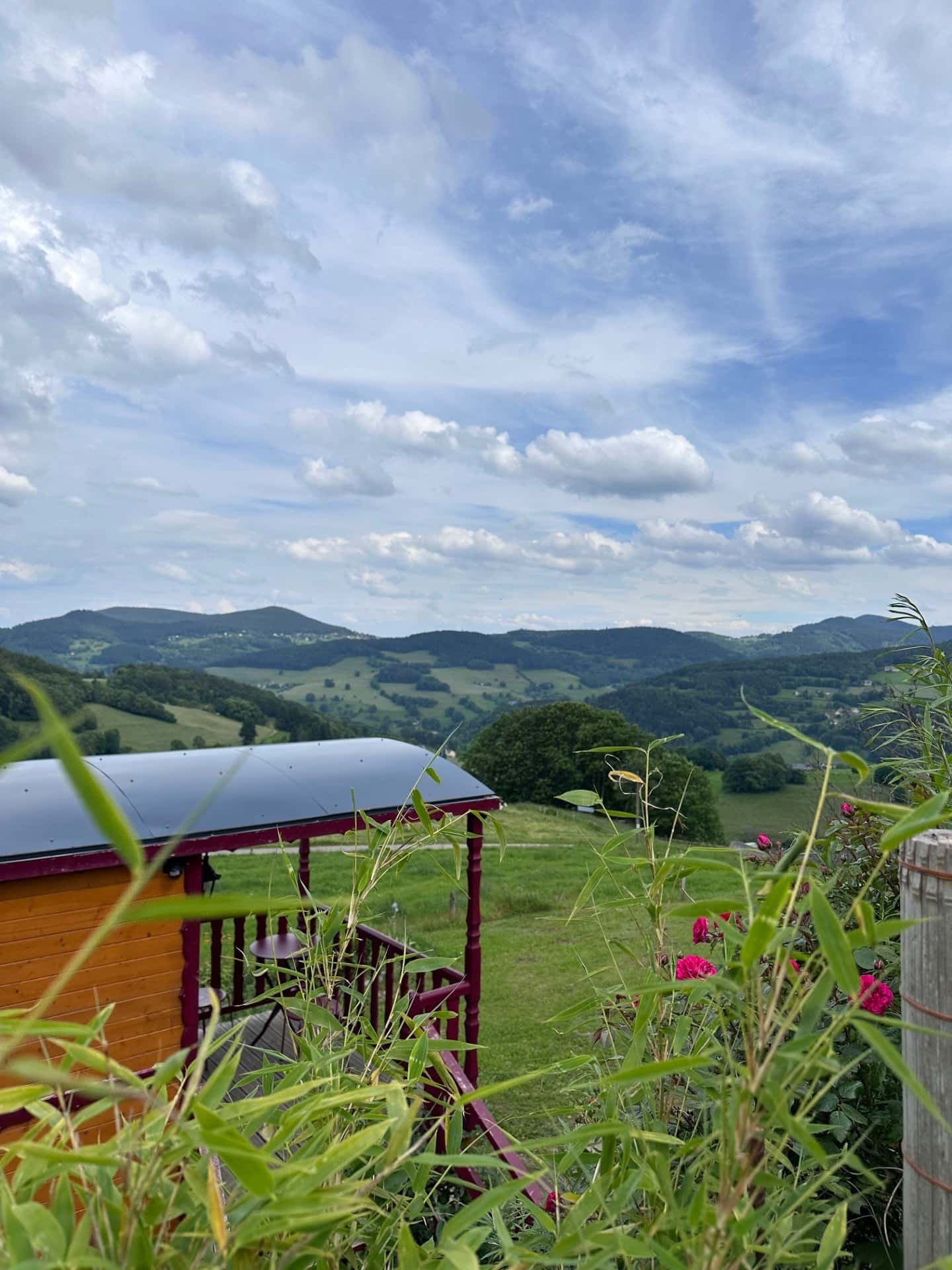
The Caravan
A quiet escape for two, set in the meadows. Alcove bed, kitchenette, views over the Vosges straight from the bed.
2 adults (+1 child)