01
The Schlossberg keep
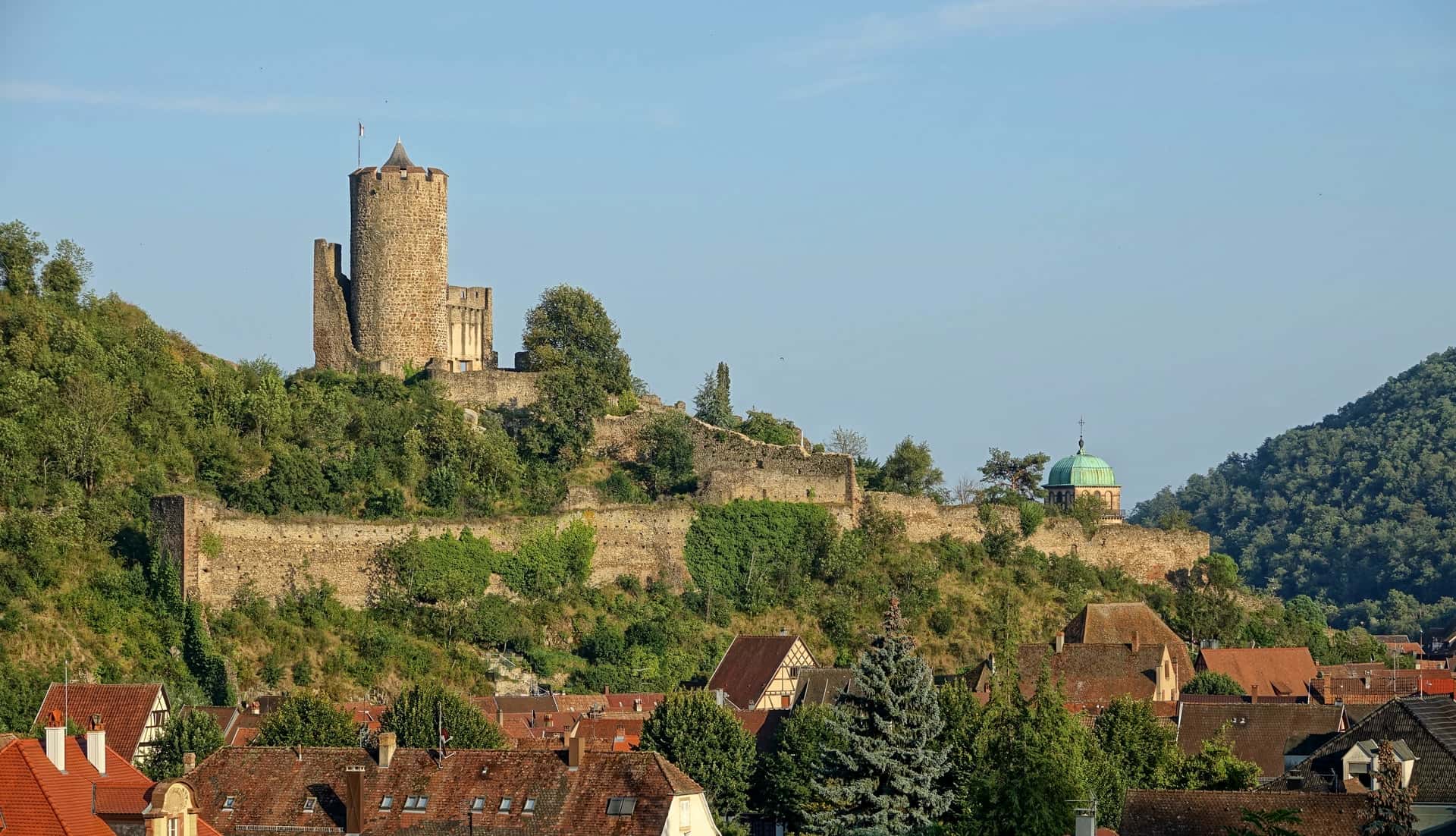
A round tower 22 m high and 11.40 m across, one of the oldest in Alsace, with walls more than 4 m thick. 122 steps lead to the top, with views over the town, the mouth of the valley and, on a clear day, the Black Forest.
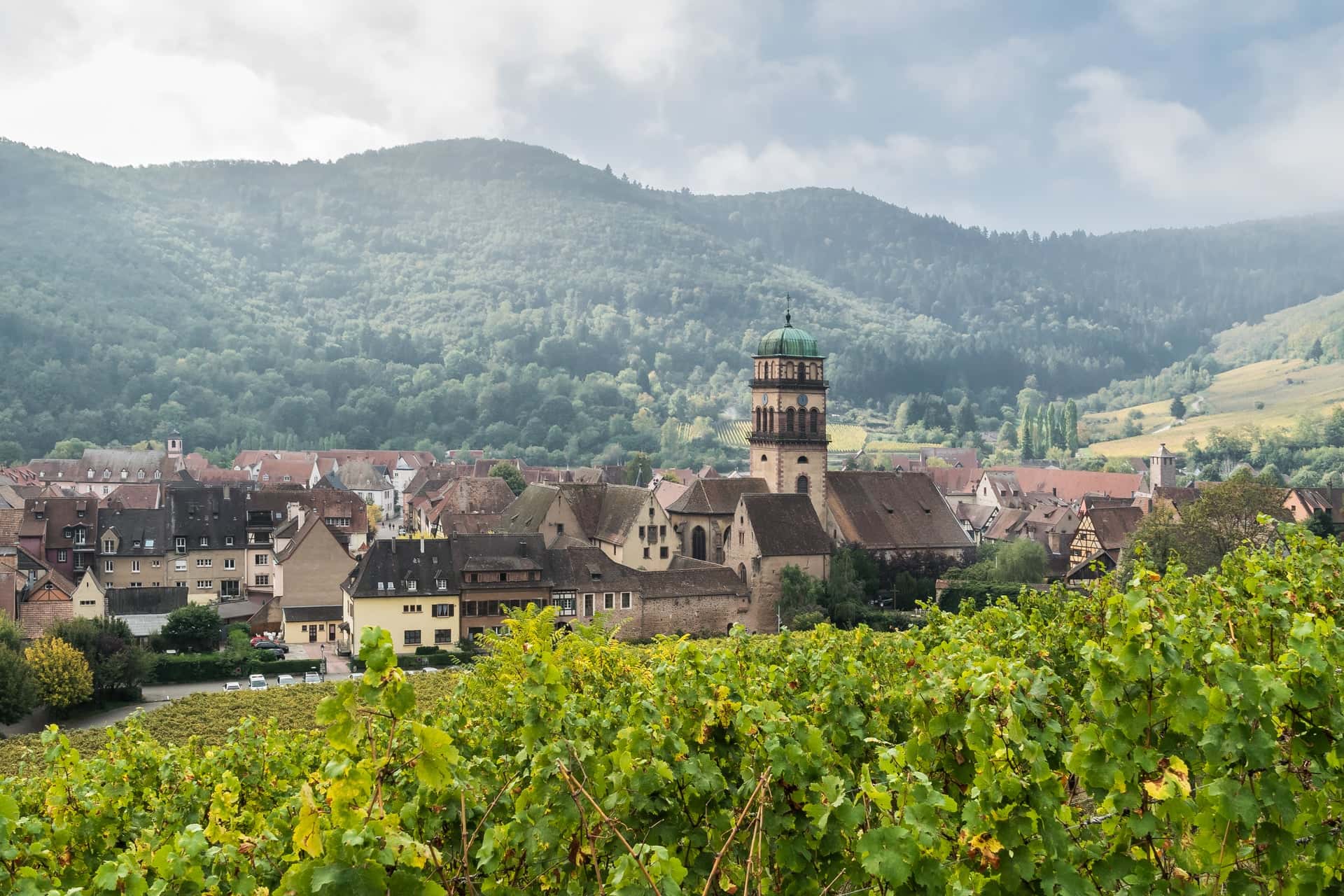
A free imperial city since 1293, its ruined keep standing over the rooftops and its fortified bridge across the Weiss.
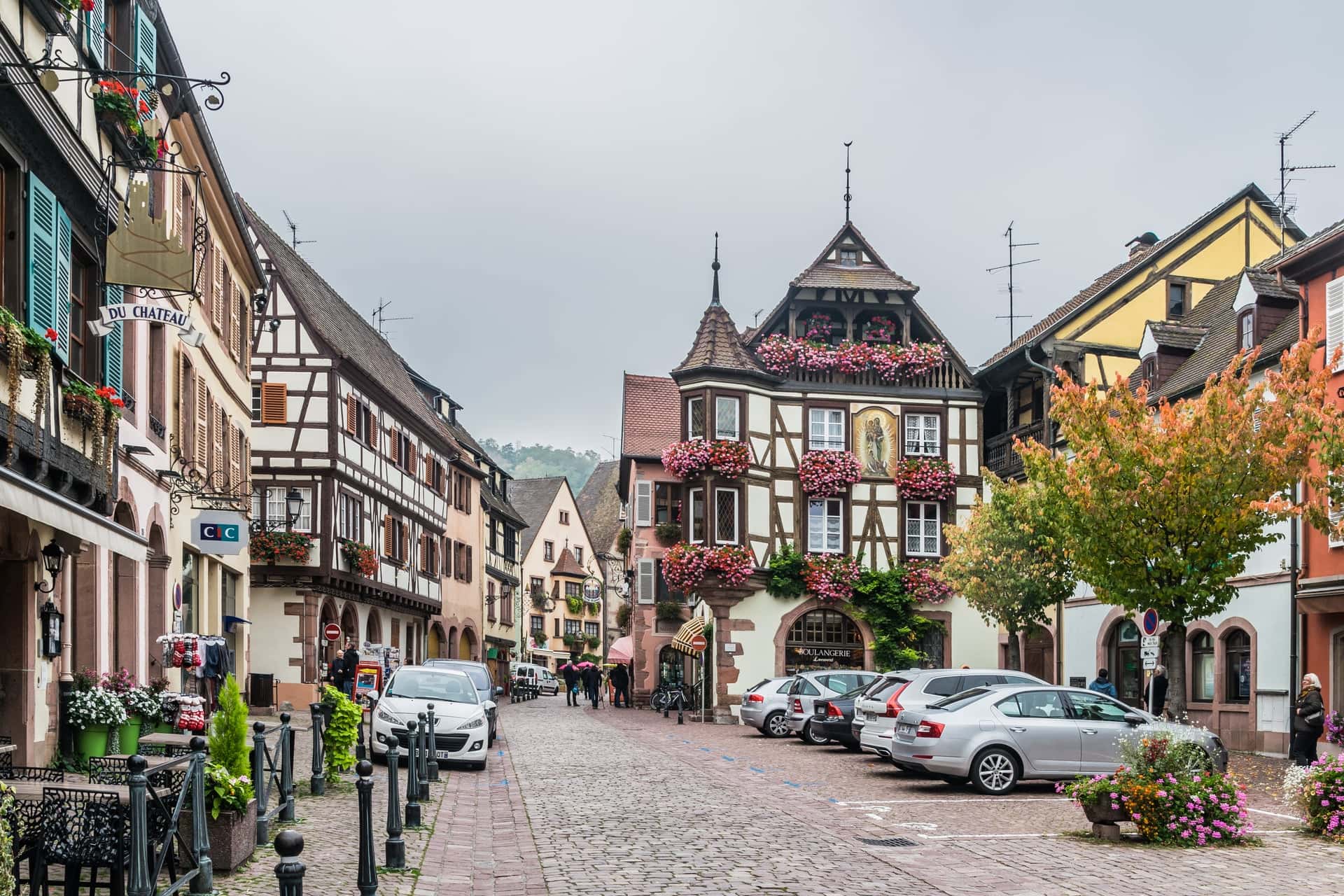
Kaysersberg sits at the bottom of the valley, between the Weiss and the vineyard slopes. The town was granted free imperial city status on 18 March 1293 and it still follows the plan of that era: one main street lined with half-timbered houses, a fortified bridge recorded as such since 1514, a 13th-century church and, above the rooftops, the round keep of the Schlossberg. None of it needs a ticket: the town and the ruins are freely open, on foot, at any hour. Since 2016 the commune has been called Kaysersberg Vignoble, after merging with Kientzheim and Sigolsheim.
The castle is first mentioned in 1227, when Emperor Frederick II had the hill bought to control the route between Lorraine and Alsace. Its construction is credited to the imperial bailiff Albin Woelfelin, and analysis of the scaffolding timbers dates the curtain wall to 1266-1268. The town then grew behind a double ring of walls raised between 1424 and 1432. The Thirty Years' War ended all that: Swedish troops ruined the castle in 1632 and it was uninhabitable by the close of the conflict. Around 1800 new owners pulled down the residential buildings to plant vines, leaving only the keep and the walls standing. The ruins were listed as a historic monument on 1 October 1841. Albert Schweitzer was born at number 124 of the main street on 14 January 1875; the house is a museum today. In 2017, Kaysersberg was voted France's favourite village.
What you really shouldn't miss during your visit.
A round tower 22 m high and 11.40 m across, one of the oldest in Alsace, with walls more than 4 m thick. 122 steps lead to the top, with views over the town, the mouth of the valley and, on a clear day, the Black Forest.
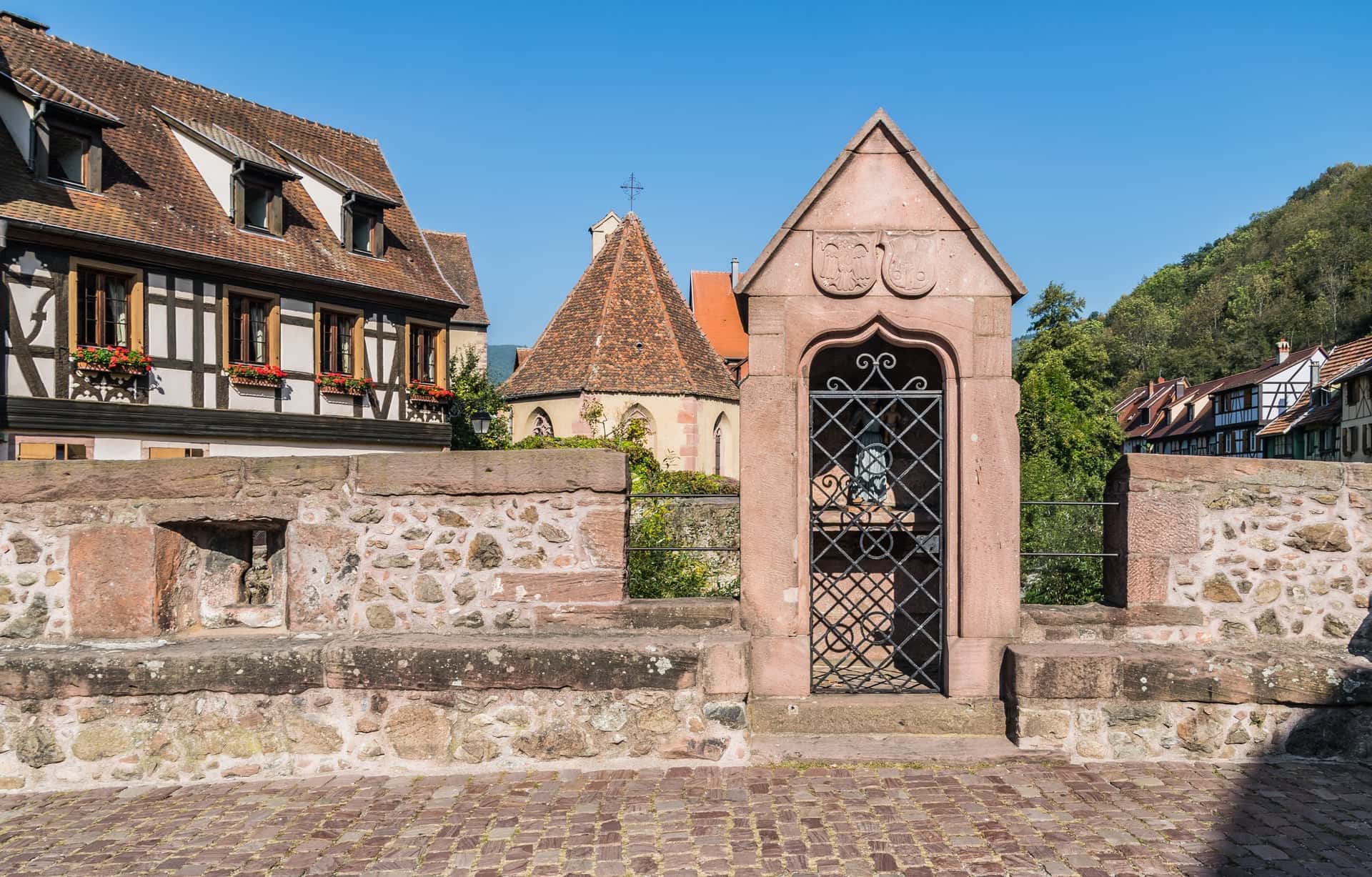
Recorded as such since 1514 and pierced with loopholes, it carries a small pink sandstone shrine at its centre. You cross it to get from one bank of the town to the other.
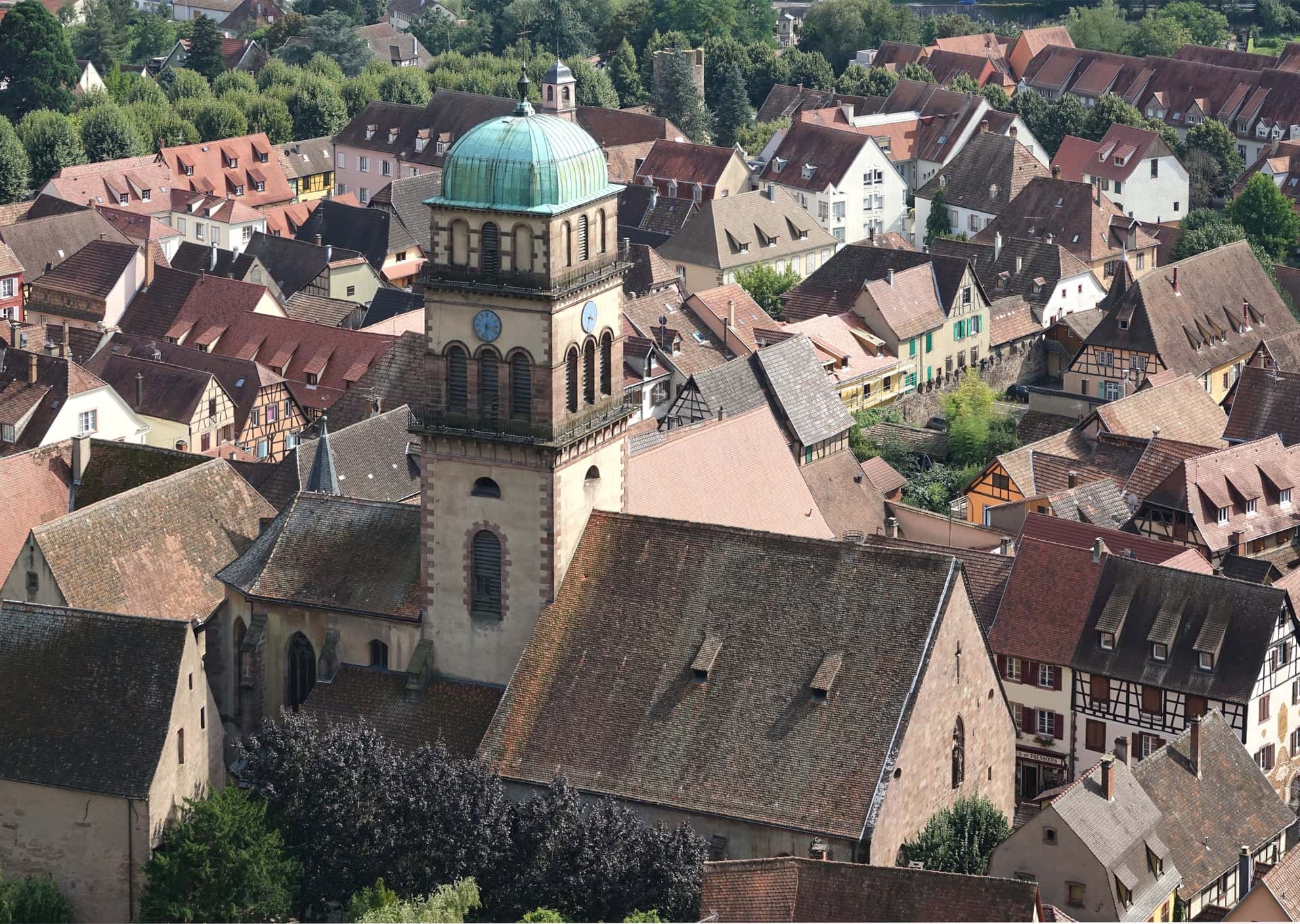
Begun in the 13th century, topped by a copper-domed tower visible from everywhere in town. The choir altarpiece was carved in 1518 by Jean Bongart.
Dated 1604, with its coffered ceiling and carved wooden doors. It opens onto rue du Général-de-Gaulle, the street where everything happens.
Albert Schweitzer was born at number 124 of that same street on 14 January 1875. The museum follows the life of the theologian, organist and physician, Nobel Peace Prize laureate. It is the only place in the village you pay to enter.
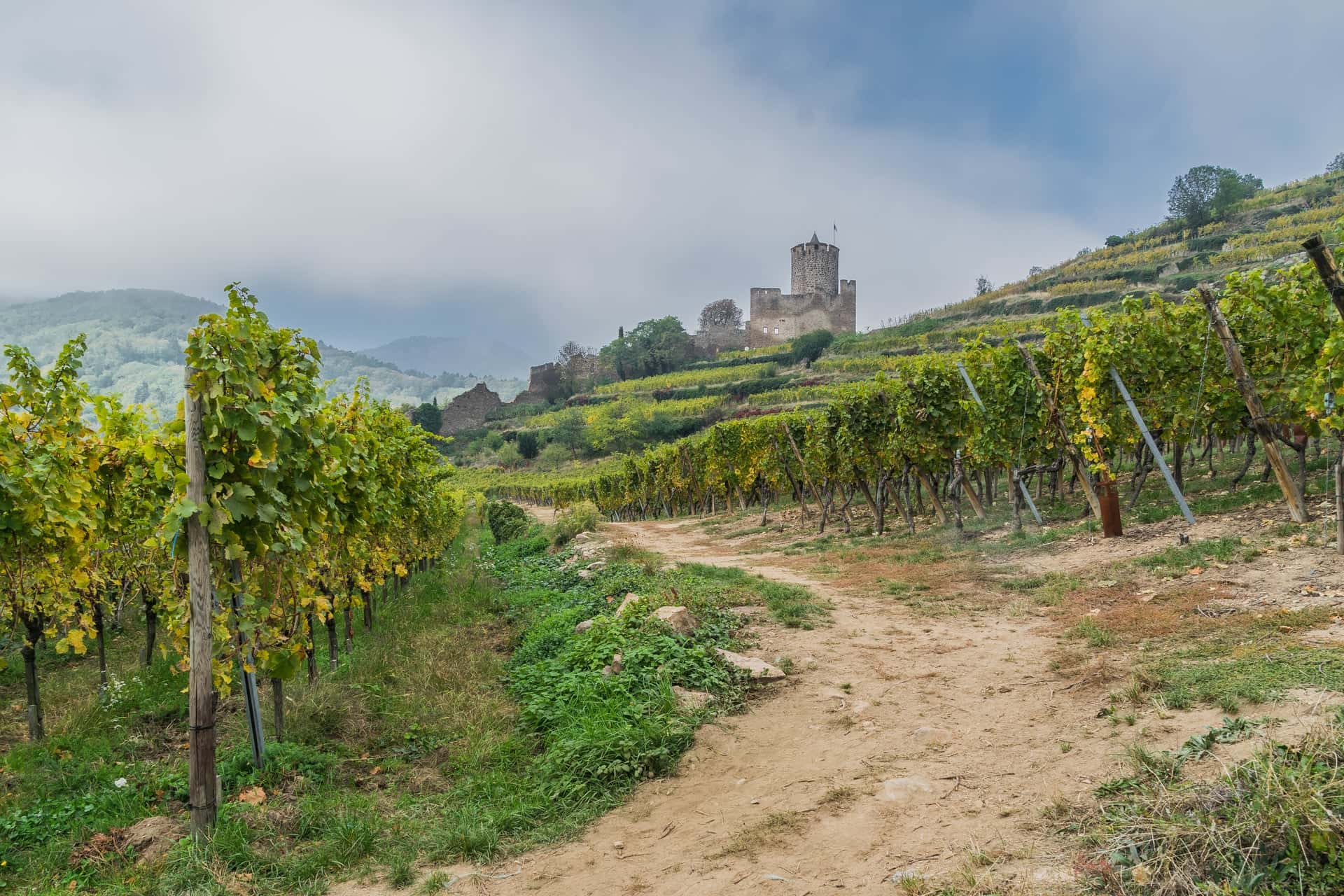
The paths up to the castle run through the vines, and that is where the view over the rooftops is best. Two stairways and a vineyard track start from the old town.
The place from several angles, to prepare your visit.
Our cottage for 9 and our caravan for two are just 5 minutes away, in pure nature.
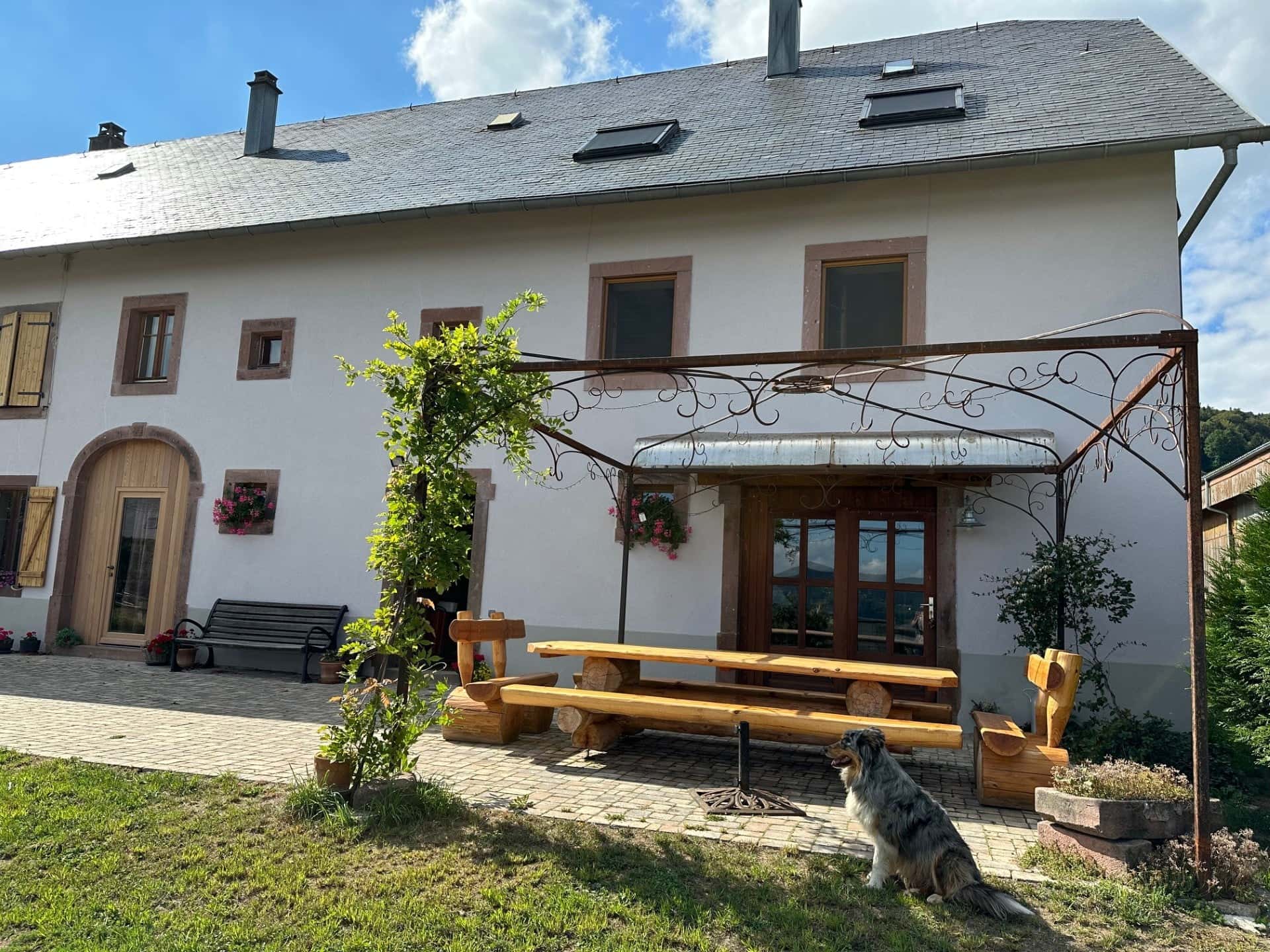
The Cottage
Large and warm, perfect for families and groups of friends who want a comfortable base to explore the region.
Up to 9 guests
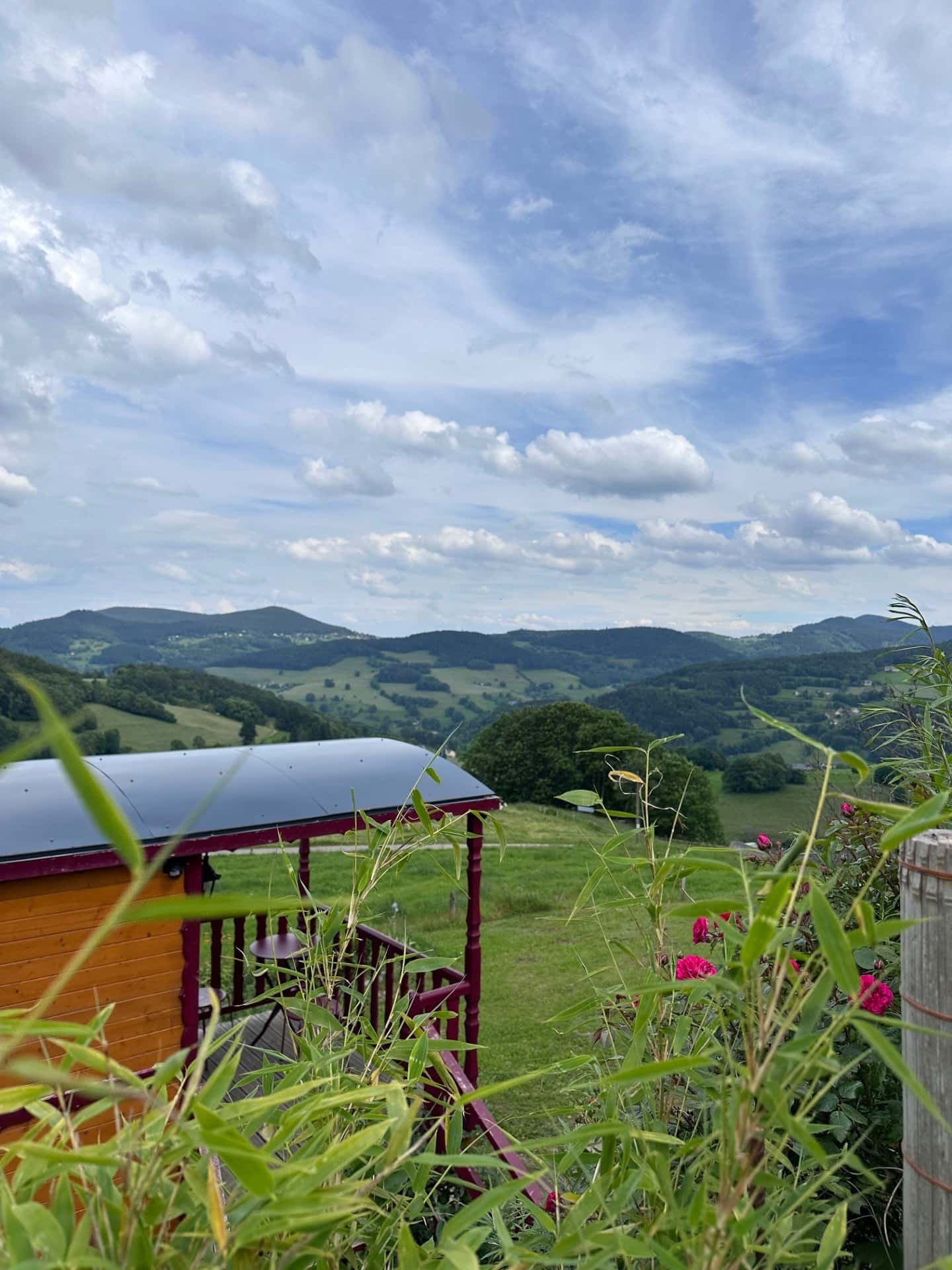
The Caravan
A quiet escape for two, set in the meadows. Alcove bed, kitchenette, views over the Vosges straight from the bed.
2 adults (+1 child)